
Leave Your Message
Engineered specifically for outdoor cycling dynamics, secure helmet strap integration, and real-time spatial awareness.


Examining the global transition from sealed acoustic isolation to open-ear directional transmission in micro-mobility and cycling sports.
The global outdoor sports audio market has entered a pivotal transition phase. For decades, the consumer audio sector was dominated by in-ear monitors (IEMs) and aggressive active noise cancellation (ANC) technologies built to isolate the listener from external sound. However, the explosive worldwide surge in urban cycling, gravel grinding, competitive road cycling, and e-bike commuting has revealed severe safety liabilities inherent in complete acoustic isolation. In traffic environments, auditory perception operates as a 360-degree early warning radar. When riders lose ambient acoustic cues—such as approaching hybrid vehicles, honking horns, overtaking cyclists, or emergency sirens—the probability of severe collisions multiplies exponentially.
Municipal transport authorities across North America, Europe, and Asia-Pacific have progressively tightened traffic legislation regarding headphone usage while operating two-wheeled vehicles. Dual-ear closed earbuds face outright bans in multiple jurisdictions. Open-Ear (OWS) and ear-hook non-occlusive acoustic systems remain the only compliant option, bridging legal adherence with uninterrupted audio streaming.
Moving past early-generation bone conduction with its high harmonic distortion and weak sub-bass, modern safety audio leans on directional air conduction. Micro-transducers focus sound waves straight into the ear canal using phase-cancellation algorithms. This ensures minimal leakage to bystanders while preserving complete ear canal openness for environmental traffic signals.
Consumer electronics brands, cycling accessory manufacturers, and sports lifestyle conglomerates are rapidly expanding OEM/ODM partnerships to capture the open-ear cycling audio segment. The convergence of high-capacity micro-batteries, Bluetooth 5.4 LE audio codecs, and liquid-silicone over-molding has set a new benchmark for specialized sports wearables.
Modern cycling audio requires an intricate balance between three opposing engineering variables: Acoustic Transparency (Spatial Perception), Dynamic Driver SPL Output (Sound Clarity at 25-45 km/h), and Aerodynamic Wind Turbulence Rejection. The best wireless earbuds designed for cycling solve this through asymmetrical acoustic chamber geometries, dedicated physical wind-deflectors, and real-time DSP equalization that boosts mid-range vocal and navigation frequencies over outdoor turbulent noise.
A deep breakdown of the core mechanical, acoustic, and electronic components required for maximum stability and outdoor reliability.
Cyclists wear a complex combination of gear: EPS foam helmets, retention dials, nylon retention straps, and cycling sunglasses with straight or curved temple arms. Cycling earbuds must utilize multi-axis memory-titanium cores or ultra-soft medical silicone ear-hooks. This ensures zero pressure-point buildup, zero slippage across cobblestones and rough descents, and seamless clearance alongside sunglasses arms.
At typical cycling velocities (20–45 km/h), relative wind velocity creates intense low-frequency vortex shedding across traditional microphone ports. High-grade cycling safety earbuds utilize hydro-formed acoustic mesh barriers, reverse-angle mic tunnels, and AI-powered dual-microphone beamforming algorithms. This isolates human voice bandwidth while eliminating over 25dB of broadband wind turbulence during cellular calls or team intercoms.
Sweat contains high concentrations of sodium and lactic acid, creating aggressive corrosive environments for micro-circuitry and driver voice coils. Outdoor cycling earbuds incorporate nano-hydrophobic conformal coatings on internal PCBA components, ultrasonic casing welds, and sweat-deflecting acoustic port designs. This allows continuous operation through heavy rain, high humidity, and intense summer perspiration.
Shenzhen Sonun Technology Co., LTD., a headphone factory founded in 2006, has carved out a niche for itself in the global market with its exceptional OEM and ODM private-label services. Over the past two decades, we've honed our craft, earning a solid reputation for delivering high-quality, innovative headphone solutions to international brands.
With an unwavering commitment to acoustic precision, structural durability, and ergonomic excellence, our engineering campus integrates state-of-the-art acoustic measurement chambers (B&K HATS), automated SMT production lines, rigorous environmental stress test labs, and comprehensive ISO-compliant quality inspection pipelines.
Every Sonun acoustic product is tested, certified, and compliant with worldwide consumer electronics safety, RF emissions, and environmental standards.


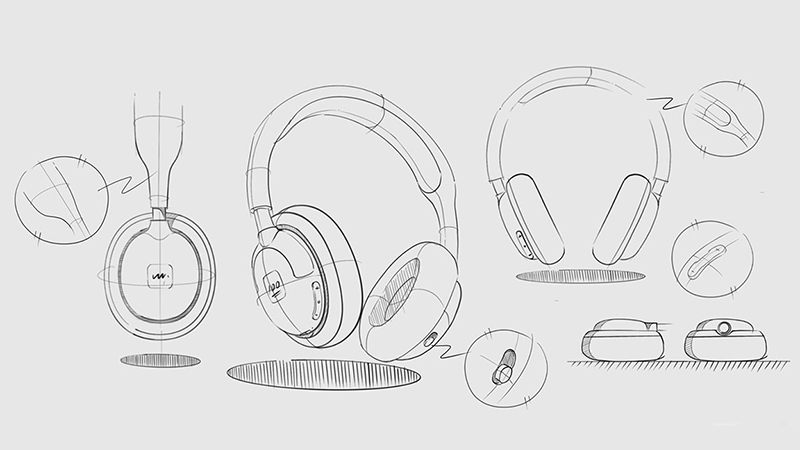
From industrial concept rendering to tooling, acoustic fine-tuning, and scalable volume production.

ODM work has made remarkable progress, mainly due to the input of independent design and research teams in various aspects. The design and research teams create new directions by thinking creatively and moving away from simply following market trends. The ODM team leads the industry trends and delivers product solutions with competitive advantages in the market. Product design combines beauty, comfort and smart technology. Sound quality is at the core of product development, and the research team has repeatedly improved and optimized product performance, committed to providing users with a high-quality listening experience.
Our journey began with a simple yet ambitious goal: to become a leader in the headphone manufacturing industry. Today, we stand as a testament to that vision. Our OEM services are the backbone of our operations. We take great pride in our ability to meticulously follow client specifications, ensuring that each product we produce is a precise reflection of our clients' vision. Our experienced team, armed with state-of-the-art equipment, navigates the production process with precision and efficiency, adhering to stringent quality standards that are recognized globally.
Explore our full selection of wireless headphones, over-ear headsets, and sports safety earbuds engineered for international distributors and custom OEM/ODM brand projects.


