





Testing Headband and Hinge Durability Before Production
The Headband and Hinges Perform Different Jobs
The headband supports the complete headphone and controls how firmly the earcups press against the user’s head. Permanent headband deformation changes the fit and can make the headphone too loose.
The extension sliders adjust the wearing size. Sliders that become stiff or move by themselves prevent users from keeping a stable fit.
The hinges allow the earcups to fold or rotate. Repeated movement places stress on the hinge body, fasteners, and surrounding plastic parts.
Internal wires also pass through the hinge or slider area in some headphone designs. Structural movement then places repeated stress on the wires.
Because the headband, sliders, and hinges perform different jobs, one mechanical test cannot represent the complete headphone structure.
Buyers Must Define What a Passing Result Means
A durability test does not pass simply because the headphone remains in one piece.
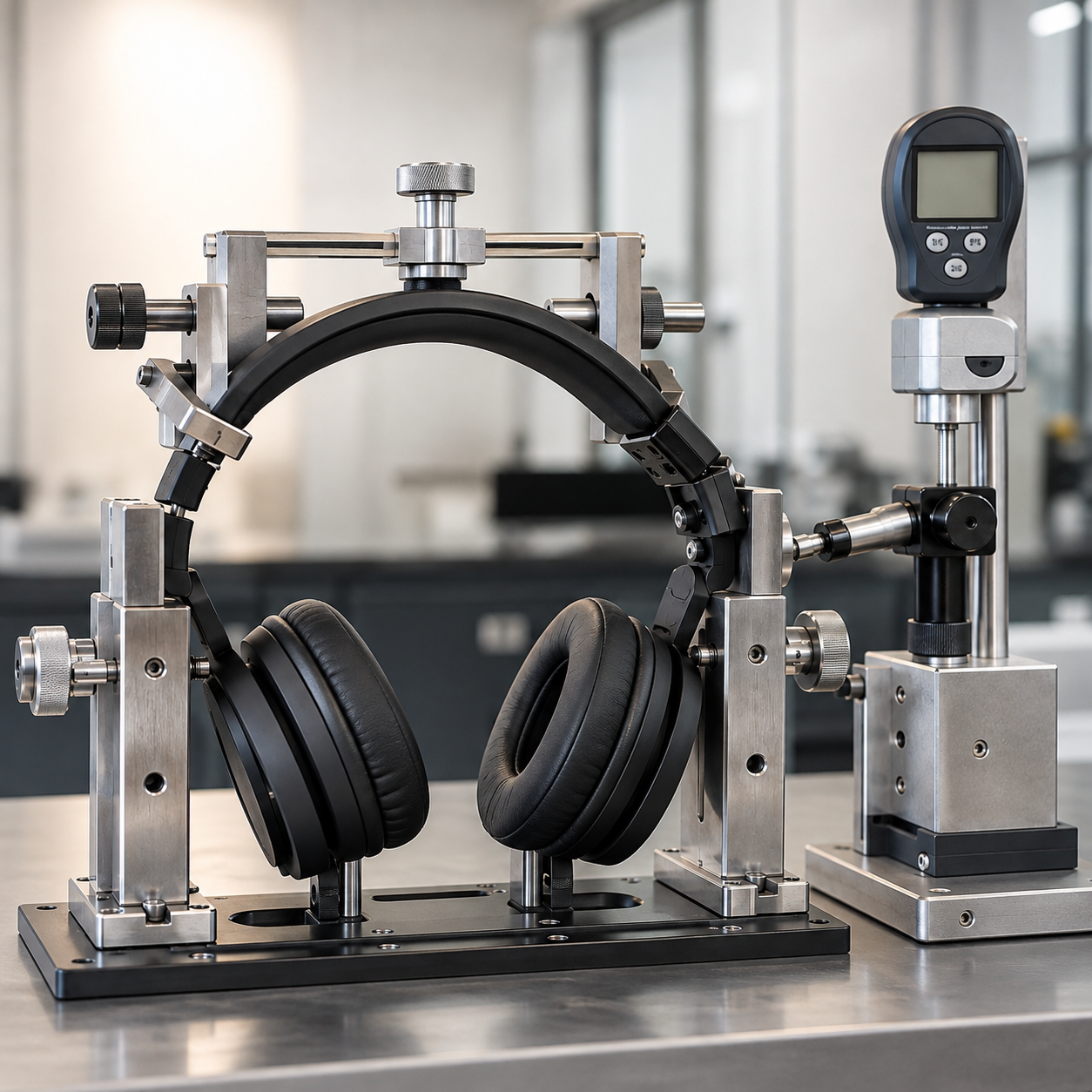
After headband cycling, the headband should have no cracks or unacceptable permanent deformation. The clamping force should remain within the range agreed by the buyer and supplier.
After hinge cycling, the hinge should not develop unacceptable looseness or abnormal noise. The movement stops and folding resistance should also remain consistent with the approved sample.
After slider cycling, both sides should still move smoothly and maintain consistent adjustment resistance. The sliders should not become stuck or move by themselves.
The buyer and supplier must record the acceptance limits before testing begins. When acceptance limits are discussed only after testing, the buyer and supplier can interpret the same result differently.
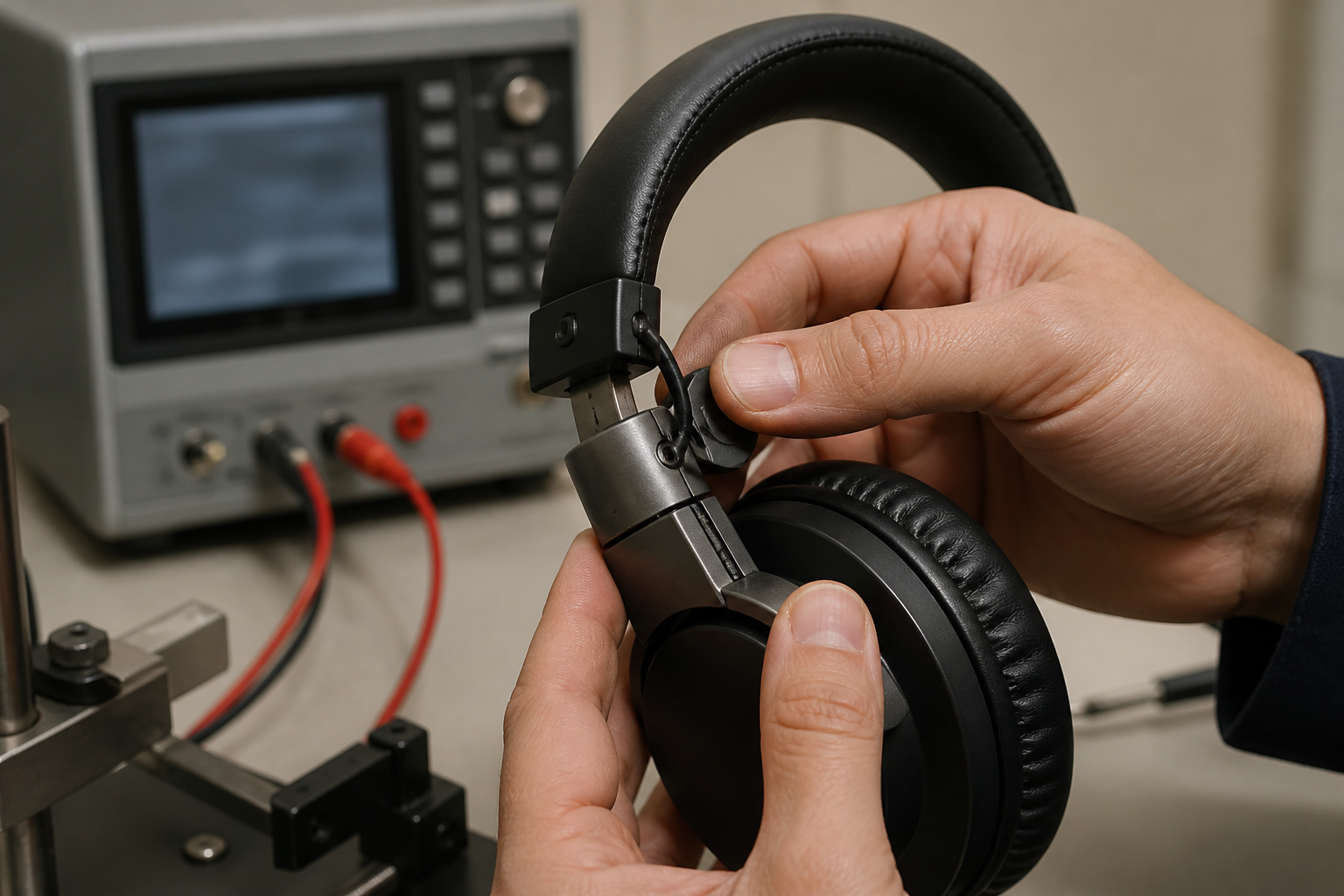
Headbands and Hinges Need Different Test Methods
Each durability test must copy the movement that the relevant headphone part performs during normal use.
| Test area | Movement to simulate | Main results to check |
|---|---|---|
| Headband | Open to an agreed width and return | Cracks, permanent deformation, and clamping force |
| Extension slider | Extend and retract through the working range | Jamming, slipping, and left-right resistance |
| Folding hinge | Fold and unfold through the designed angle | Looseness, noise, and fastener movement |
| Earcup swivel | Rotate through the allowed range | Failed stops, housing contact, and structural play |
A non-folding headphone does not need a folding test. A folding travel headphone needs closer inspection of the hinge and movement stops.
A harsher test is not automatically a better test. Movement outside the designed operating range only proves that the sample was exposed to an unrelated load. The test result does not represent normal product use.
A Cycle Count Alone Cannot Prove Headphone Durability
A cycle count becomes useful only when the complete test conditions are available.
One test can open a headband slightly, while another test opens the same headband close to its designed limit. The two tests place different loads on the structure even when both reports show the same cycle count.
Hinge reports must also state the movement angle. A report that says “10,000 hinge cycles” without stating the angle does not show how much movement the hinge experienced.
Movement speed and pause time also change the test conditions. A fast continuous test does not represent the same use pattern as slower movement with pauses.
Buyers should compare the opening width, movement angle, and speed. Buyers should also compare the cycle count, sample quantity, and failure limits.
A cycle count without complete test conditions should not be used to approve mass production.
Headphone Functions Must Be Checked After Structural Testing
A headphone that has not broken can still fail the complete evaluation.
Permanent headband deformation changes the earcup position and clamping force. A different earcup position changes wearing stability and can also change the acoustic seal.
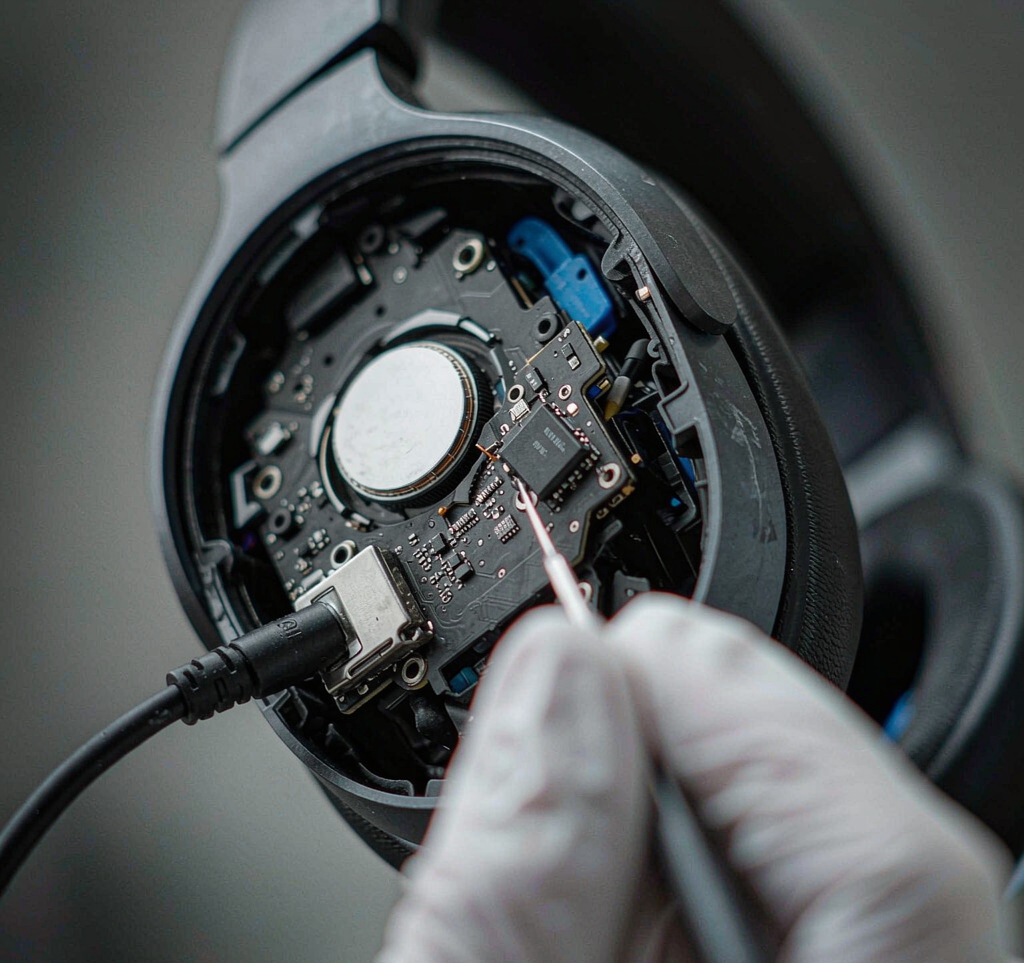
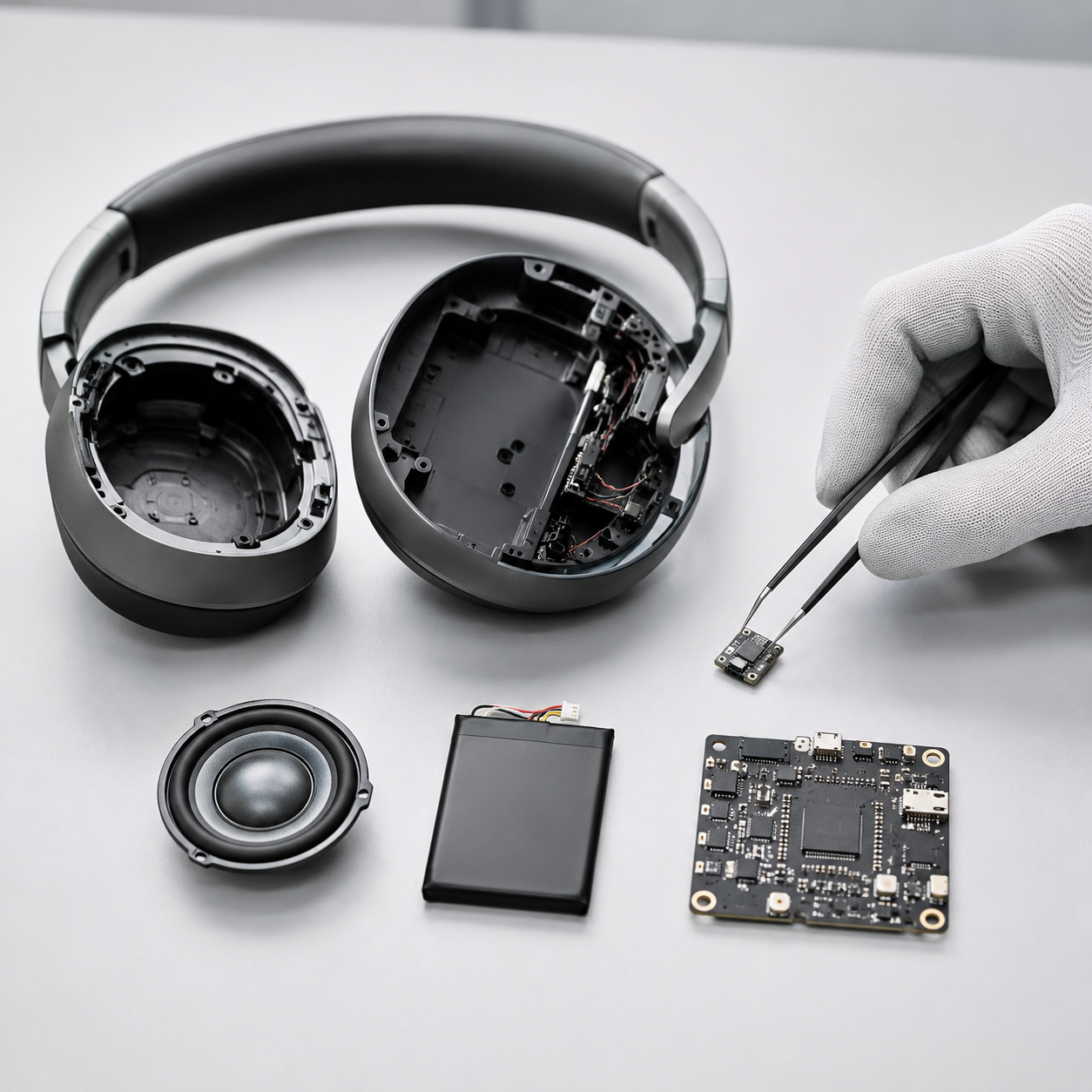
When wires pass through a hinge or slider, repeated movement can damage the internal wire without producing an obvious external crack. After structural testing, the supplier should check the left and right audio channels, buttons, and charging function.
The supplier should also check every function connected to the tested structure. For example, a microphone or control component positioned near the hinge needs another functional check after hinge cycling.
IEC 60268-7:2025 specifies headphone characteristics and related measurement methods. OEM buyers can use the relevant product characteristics to decide which performance checks must be repeated before and after structural testing.
Any result outside the agreed limit must stop production approval until the supplier identifies the cause and validates the corrected product version.
Headband and Hinge Validation Must Finish Before Full Production
Headband and hinge validation should begin with engineering samples.
An engineering sample is a sample used to confirm the product design before production preparation is complete. Once the headband material, hinge structure, and fastening method are defined, the supplier should test engineering samples that are close to the planned production configuration.
A failed engineering sample must be corrected and tested again before the project moves forward. A corrected structure that has not passed another test should not enter the next project stage.
After the design passes, the supplier should build a small trial batch using the planned production materials and assembly process. The small trial batch confirms that production materials and factory assembly do not change the structural performance already demonstrated by the engineering samples.
Before full assembly begins, the factory must confirm that the received headbands, hinges, and fasteners match the approved versions. Unverified structural parts should not enter full production.
Checks during the first production batch monitor process stability. First-batch checks do not replace engineering sample validation or trial-batch validation. When the first durability check happens after full production, a failed result already creates rework and delay.
Test Records Must Match the Exact Headphone Version
A useful durability report must identify the exact headphone samples that were tested.
The report should include the headphone model and structural version. The report should also record the sample quantity, test date, test conditions, and result for each sample.
Photos or videos can show that a test was performed, but visual evidence cannot replace written acceptance limits.
When a crack, loose hinge, or failed slider appears, the report should identify the affected sample and the stage at which the failure occurred. After the supplier changes a material, dimension, or fastening method, the corrected version must complete the relevant test again.
Folding travel headphones need more attention on hinges and movement stops. Office headphones used throughout the day need more attention on slider wear and clamping consistency.
OEM buyers should approve the complete structure, test method, and acceptance limits instead of approving an isolated cycle count.
When discussing an over-ear headphone project with Sonun, buyers can explain how the headphone will be used and whether users will fold it frequently. The buyer and supplier can then define the test movements, conditions, and approval evidence before production begins.